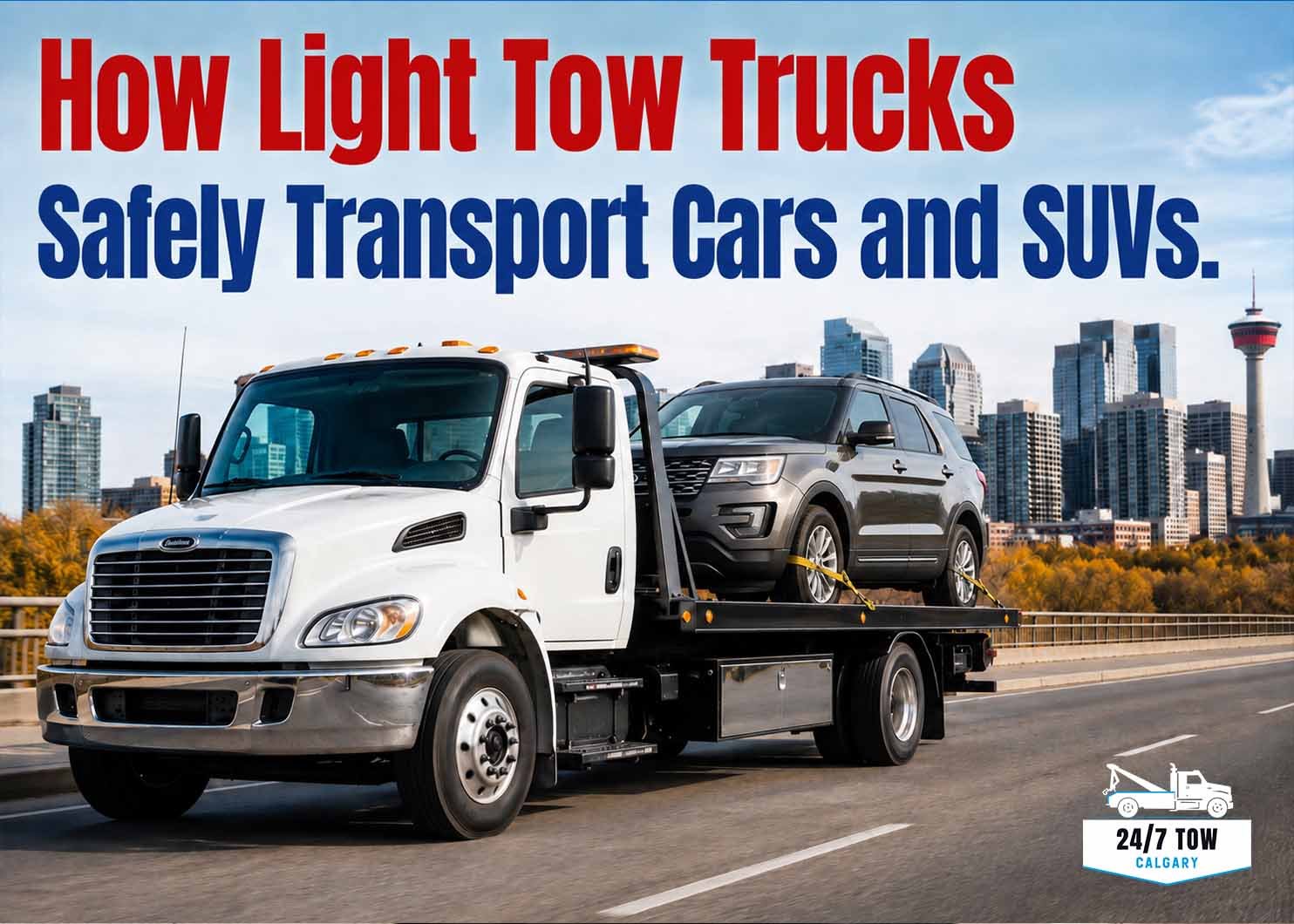


Not every tow job needs a massive rig. A sedan with a dead battery or an SUV with a blown tire doesn’t require the same equipment as a delivery truck. It needs a light tow truck built for exactly that kind of vehicle, nothing more and nothing less.
Using the right sized truck isn’t just about efficiency. It’s about avoiding unnecessary strain on a vehicle that was never designed to be hauled by oversized equipment meant for something several times its weight.
Here’s how light duty towing actually works, and why matching the right truck to the right vehicle matters more than most drivers realize until something goes wrong.
TL;DR
- Light duty tow trucks handle cars, SUVs, minivans, and smaller pickups.
- Flatbed towing keeps all four wheels off the ground, ideal for AWD and lower vehicles.
- Wheel-lift towing lifts just the front or rear axle, suited to standard tow situations.
- Proper equipment matching prevents transmission damage and cosmetic scrapes during transport.
- Experienced operators secure vehicles at multiple points to prevent shifting in transit.
What Counts as a Light Duty Vehicle
Light duty towing typically covers sedans, hatchbacks, SUVs, minivans, and smaller pickup trucks, generally anything under roughly 10,000 pounds. This is the category most personal vehicles fall into, which makes it the most common type of tow call by a wide margin.
A light duty tow truck is built with the right bed size, lift capacity, and securing points for these vehicle types specifically, rather than being scaled down from equipment meant for something heavier.
Flatbed vs. Wheel-Lift Towing
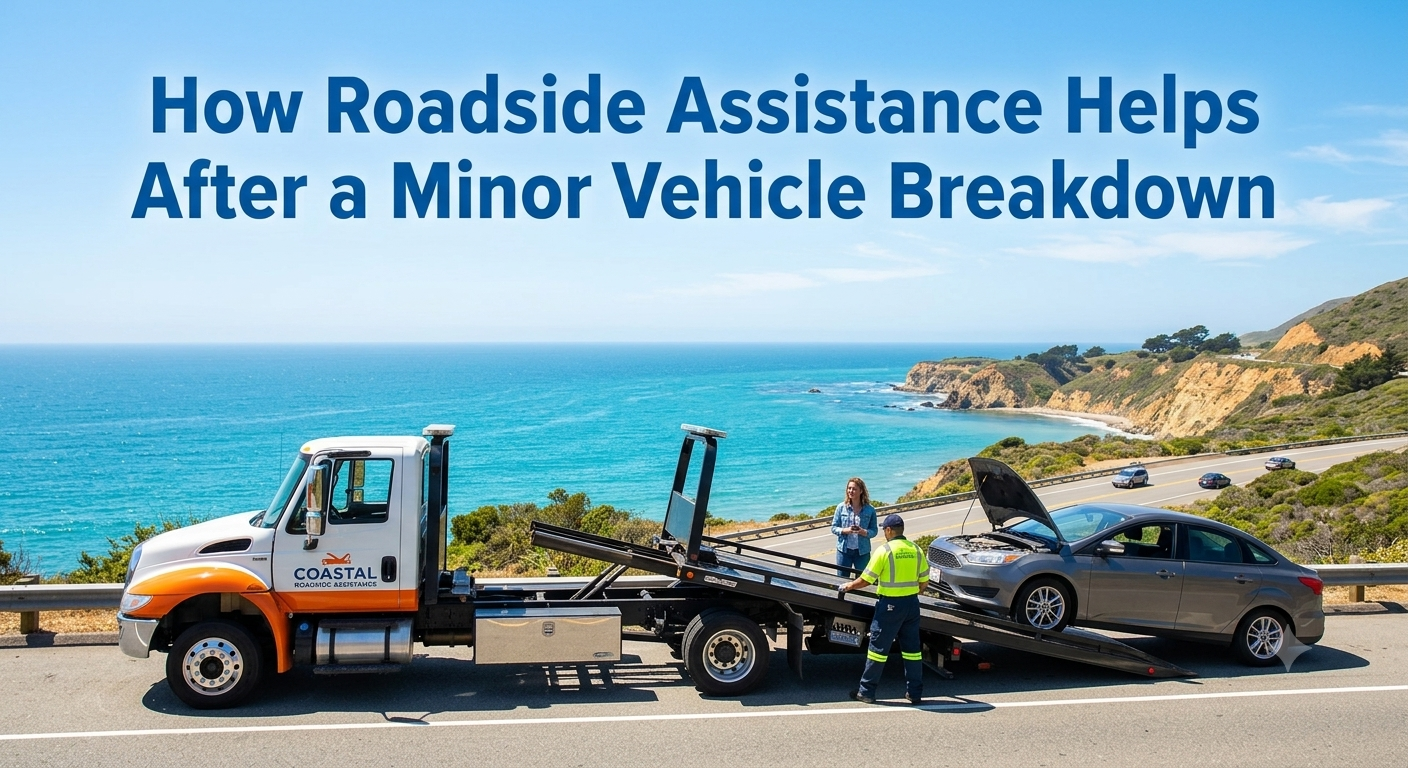
Flatbed towing loads the entire vehicle onto a flat platform, keeping all four wheels off the road completely. This method is safest for all-wheel-drive vehicles, lowered cars, or anything with existing damage, since no part of the vehicle touches the road during transport.
Wheel-lift towing lifts either the front or rear axle while the other end stays on the ground, held by wheel straps rather than direct contact with the frame. It’s faster to set up and works well for standard two-wheel-drive vehicles in good condition that don’t need the full flatbed treatment.
Choosing between the two isn’t random. A dispatcher who knows the difference will ask about your drivetrain before sending a truck, rather than assuming one method fits every situation.
How Operators Protect Your Vehicle During Transport
Trained operators use soft straps or wheel nets rather than chains directly on the frame, avoiding scratches or structural stress that older towing methods used to cause regularly. Vehicles are secured at multiple points to prevent shifting during transport, especially over uneven roads or sudden braking.
This is where an experienced car towing service makes a visible difference. Rushed or improperly secured loads are one of the most common causes of transport damage, and it’s almost always avoidable with the right technique and a few extra minutes at pickup.
Mirrors, antennas, and low hanging body panels also get checked before loading, since these are the parts most likely to catch during a rushed load onto a flatbed.
When Light Duty Towing Is the Right Call
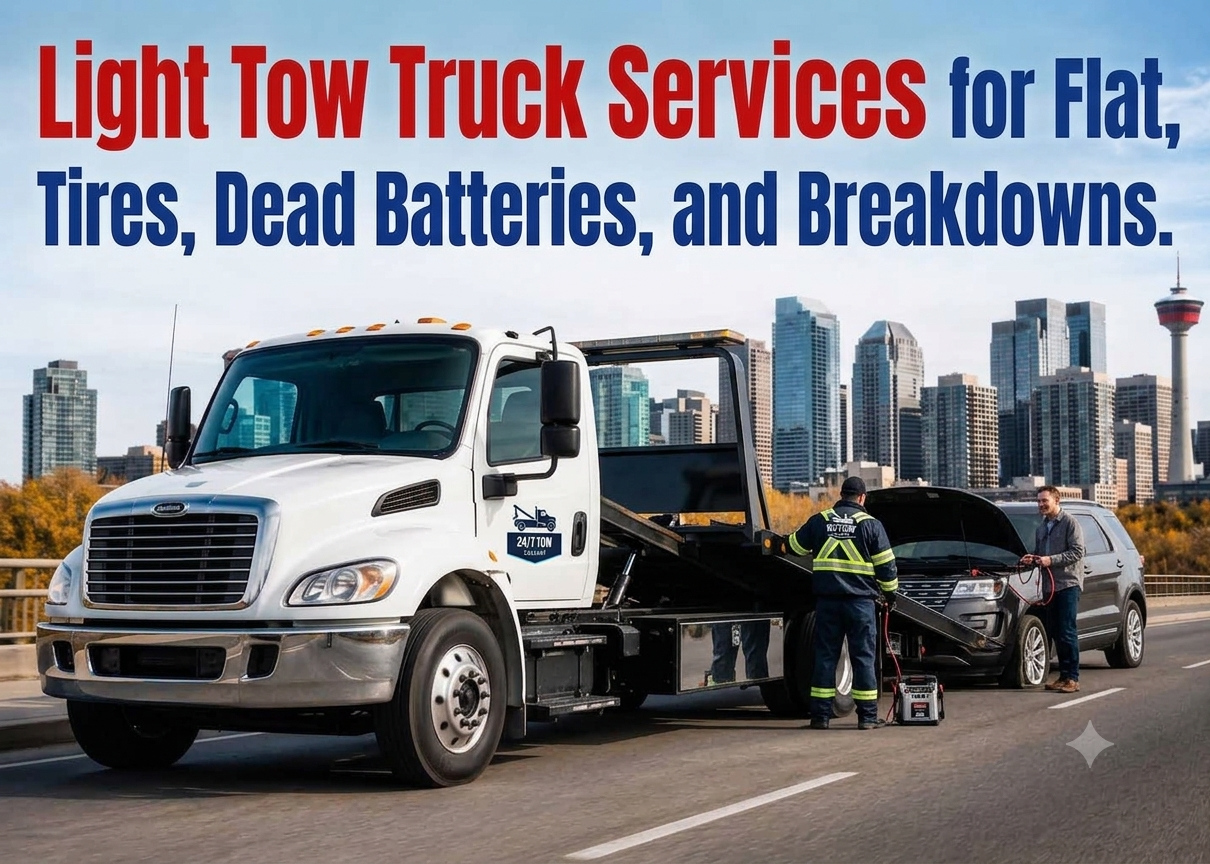
If your car won’t start, has a flat with no usable spare, or needs to move a short distance for repair, light duty towing covers it without any complication. This also applies to most SUV towing service needs, since standard SUVs fall well within light duty weight limits despite their larger size.
For accident recovery or vehicles with structural damage, additional care and sometimes different equipment may apply, since a damaged vehicle can behave unpredictably during loading if it’s not approached correctly.
Why Equipment Matching Matters
Using an undersized truck risks damage or an unsafe load that could shift mid transport. Using an oversized truck for a small car is inefficient and sometimes harder to maneuver in tight spaces like parking garages or narrow residential streets common across Calgary.
A properly matched light tow truck balances safety, efficiency, and cost for the vehicle type involved, which is exactly why dispatch should ask a few questions before a truck ever leaves the yard.
What to Expect During Pickup
A typical light duty tow starts with the operator assessing the vehicle’s position, drivetrain, and condition before choosing flatbed or wheel-lift. Loading usually takes 10 to 15 minutes once the truck arrives, followed by a final check to confirm everything is secured before departure.
Drivers are welcome to watch the loading process and ask questions. A confident operator won’t rush through securing the vehicle just to save a few minutes.
FAQ
Can a light duty tow truck handle an SUV?
Yes, most SUVs fall well within standard light duty weight and size limits, even larger three row models.
What’s the difference between flatbed and wheel-lift towing?
Flatbed keeps all four wheels off the ground and suits AWD or damaged vehicles. Wheel-lift raises only one end and works for standard towing situations.
Will towing damage my car?
Not when handled properly. Trained operators use the right straps and securing methods to avoid scratches or mechanical stress during transport.
How do I know which towing method my vehicle needs?
A good dispatcher will ask about your vehicle’s drivetrain and condition to recommend the right method before the truck arrives at your location.
How long does a light duty tow usually take to set up?
Loading typically takes 10 to 15 minutes once the truck arrives, depending on the vehicle’s position and condition.
Conclusion
Matching the right truck to the right vehicle isn’t a minor detail, it’s what keeps a car or SUV arriving at its destination the same way it left. Light duty towing, done properly, protects the vehicle every step of the way, from the first strap to the final drop off.
Need a properly matched tow for your car or SUV? Contact our team for fast, damage-free service.