

A semi jackknifed on Stoney Trail isn’t a job for the same truck that handles a flat tire on a sedan. Heavy duty towing exists because some vehicles simply weigh too much and sit too high for standard equipment.
TL;DR: Heavy tow trucks are built to move trucks, buses, and other commercial vehicles that weigh far more than a car. Disabled truck towing often involves air brake systems and specific coupling gear. Bus towing services carry the added responsibility of passenger safety during the recovery. Not every towing company runs this kind of equipment, so it’s worth confirming before you call.
Most drivers never think about heavy duty towing until they’re stuck behind a disabled truck blocking a lane, or riding a bus that suddenly won’t move. It’s a different world from a passenger car breakdown.
This guide covers what heavy duty towing actually involves, the equipment behind it, and what changes when the vehicle in question is a bus instead of a sedan.
What Makes Heavy Duty Towing Different
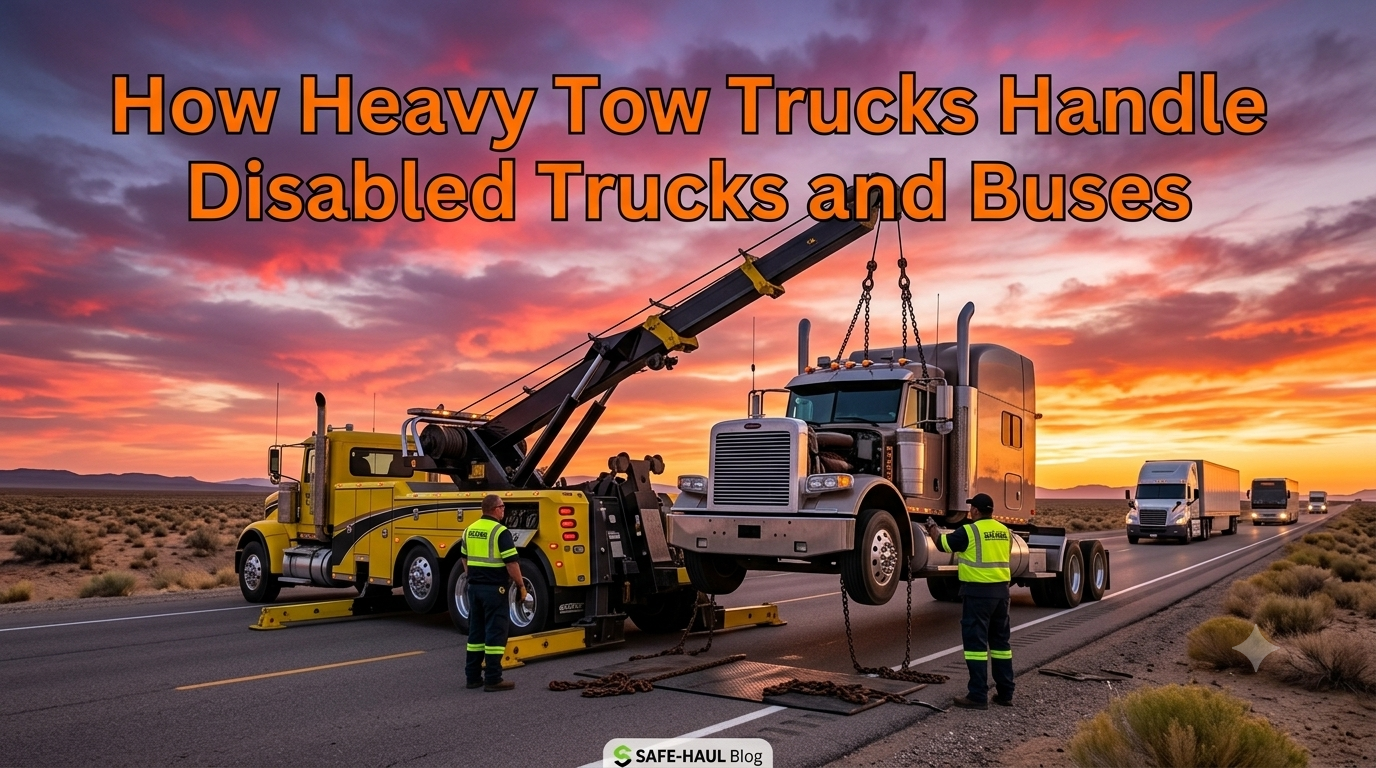
Weight changes everything. A standard tow truck built for a passenger car simply can’t lift or pull a fully loaded truck or a bus. Heavy duty towing uses rigs rated for tens of thousands of pounds, with hydraulic systems strong enough to handle that load safely.
Size matters too. A commercial truck or bus takes up more space on the road, which changes how a recovery team blocks traffic and positions equipment. A recovery on Deerfoot Trail during rush hour looks nothing like a car pulled off a side street.
The vehicles involved also have different mechanical systems. Air brakes, multiple axles, and trailer couplings all require specific knowledge that a light duty tow driver wouldn’t necessarily have.
Equipment Behind a Heavy Tow Truck
Heavy duty wreckers. These are built with reinforced booms and winches capable of lifting loads a standard truck can’t touch.
Rotators. Used for complex recoveries, like a truck on its side or in a ditch, where the vehicle needs to be righted before it can be towed.
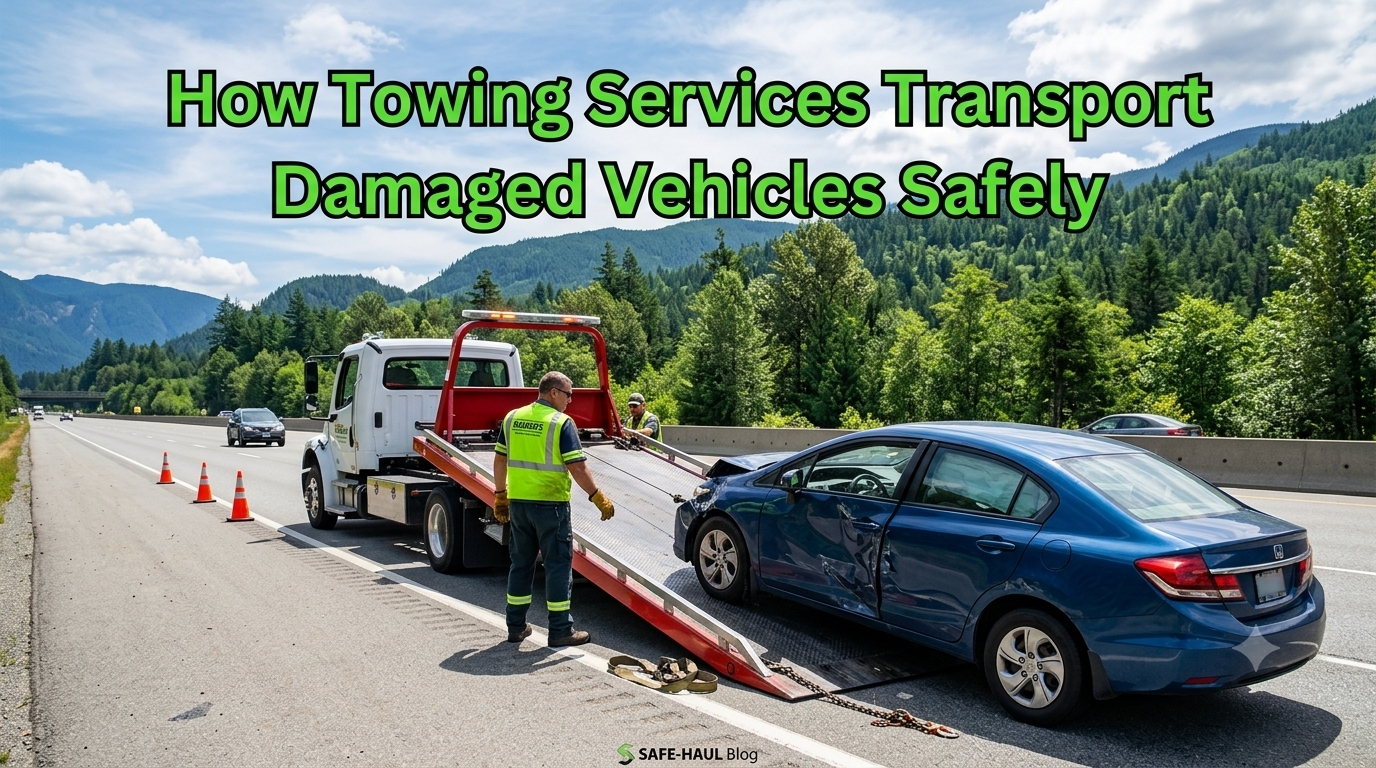
Low loaders and tilt trays. These carry the vehicle fully off the ground for long distance moves, similar in concept to a flatbed but built for much heavier loads.
Air cushion recovery systems. Used to right an overturned vehicle safely, reducing the risk of further damage during the process.
None of this equipment overlaps with what a light duty towing company runs day to day, which is why the two services stay separate.
How Disabled Truck Towing Works
A disabled truck call usually starts with a diagnosis over the phone, engine failure, a blown tire, an air brake issue, or a trailer that’s disconnected.
On site, the operator checks the truck’s air brake system before doing anything. Air brakes lock when pressure drops, which means the truck often can’t simply be pulled the way a car can. The team needs to release the brakes manually or use equipment built to tow with them engaged.
Trailer separation is another factor. If a truck is hauling a trailer, the recovery may need to handle the tractor and trailer separately, depending on what caused the breakdown.
Bus Towing Services and Passenger Safety
Bus towing services carry an extra layer that most towing jobs don’t have, passengers who may still be on board.
The first step is always getting people off safely, especially if the breakdown happened somewhere unsafe like a highway shoulder. Once the bus is empty, the recovery follows a similar process to disabled truck towing, checking brakes, confirming the safest way to lift or load the vehicle.
Buses are also longer and heavier than most trucks, which means positioning equipment correctly matters even more. A bus stuck at an angle on a narrow street needs careful planning before any towing begins.
Commercial Vehicle Towing and Fleet Coordination
Commercial vehicle towing rarely involves just the driver and the tow company. Fleet managers, dispatch teams, and sometimes insurance representatives are part of the process.
A breakdown affects a schedule, a delivery, a route. That means the towing company often needs to communicate not just with the driver on scene but with someone back at the company managing the bigger picture.
This is different from a personal vehicle tow, where the decision making usually stops with the driver standing next to their car.
What to Check Before Calling a Heavy Tow Company
Confirm they run heavy equipment. Not every towing company operates wreckers, rotators, or low loaders. Ask directly before assuming.
Ask about air brake experience. This is specific knowledge that not all tow operators have, and it matters for anything with a commercial brake system.
Check response time for heavy calls. Heavy duty jobs sometimes take longer to dispatch since fewer trucks and operators are qualified to handle them.
Ask about coordination with authorities. A disabled truck or bus blocking a lane often needs traffic control, which the towing company should know how to manage.
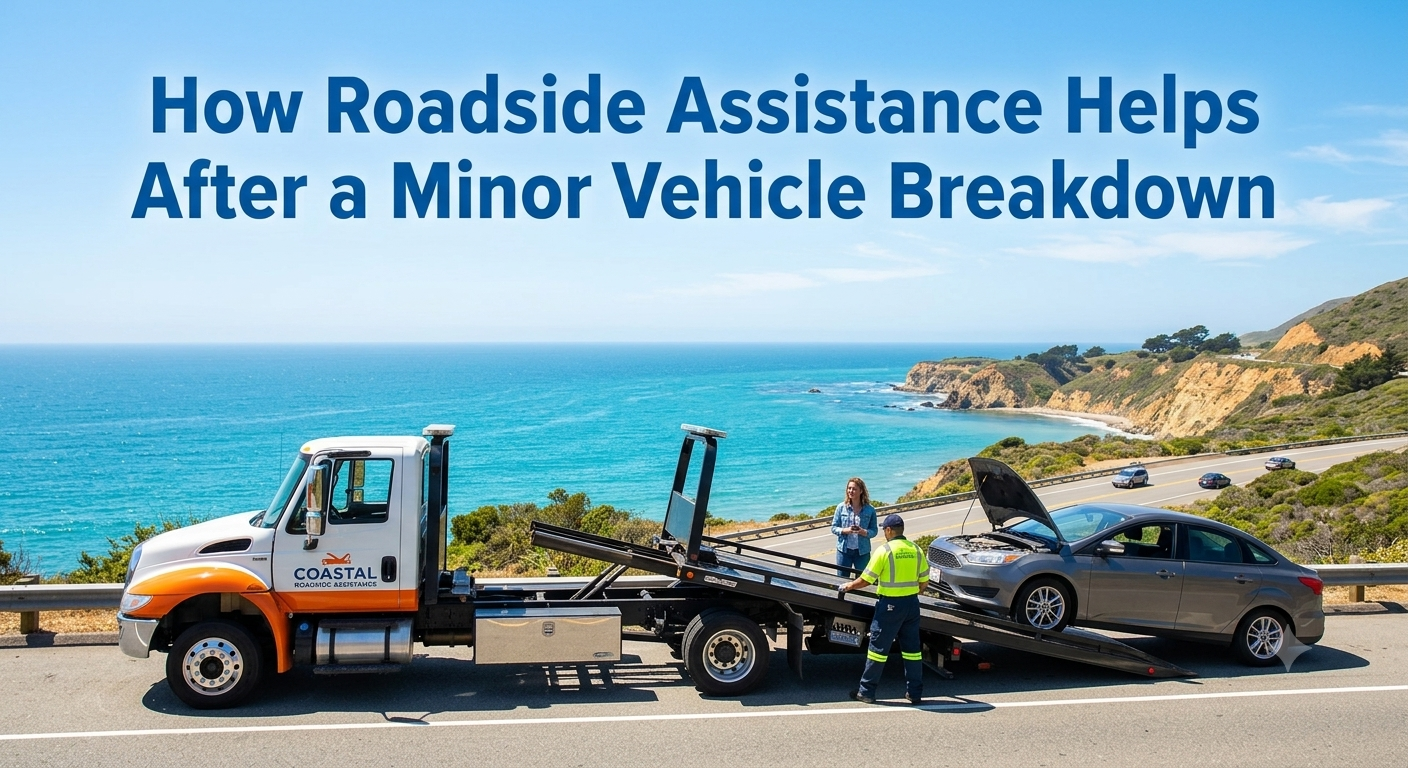
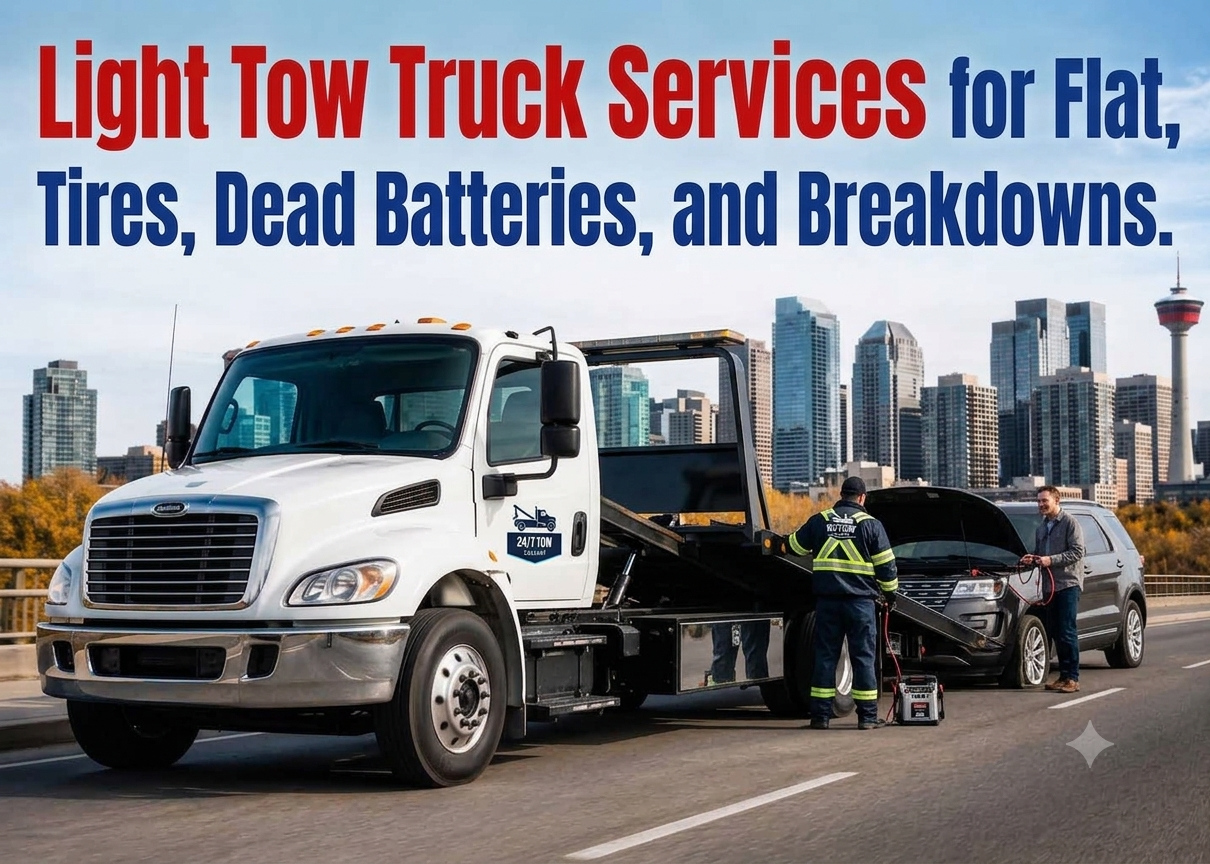
If you’re dealing with a lighter vehicle instead, like a car, SUV, or small truck, that’s a separate category. 247 Tow Calgary handles Light Duty Towing and Accident Recovery Services for exactly those situations.
Cost Factors in Heavy Duty Towing
Heavy duty towing costs more than a standard tow, largely because of the equipment involved and the specialized training required to operate it safely.
Distance, the complexity of the recovery, whether winching or righting is needed, and time of day all affect the final price. A straightforward disabled truck tow costs less than a bus recovery requiring passenger evacuation and traffic control.
Always ask for a clear estimate before the equipment is dispatched, since heavy duty jobs vary more in scope than a routine car tow.
FAQ
Can a regular tow truck handle a disabled semi?
No. A standard tow truck isn’t rated for the weight or built with the equipment needed to safely move a semi or similar commercial vehicle.
What happens to passengers if a bus breaks down?
They’re evacuated safely first, usually to a safe waiting area, before any towing or recovery work begins on the vehicle itself.
Why do air brakes matter for towing a truck?
Air brakes lock when pressure drops, which means the truck may not move freely like a car would. Operators need specific equipment or training to release them safely.
How long does a heavy duty tow usually take to arrange?
It varies. Fewer companies run heavy equipment, so dispatch can take longer than a standard car tow, especially outside major routes.
Does heavy duty towing cover construction equipment too?
Often yes, though it depends on the company. Confirm directly whether their equipment and experience extend beyond trucks and buses.
Final Thoughts
Heavy duty towing solves a problem most drivers never think about until they’re stuck behind it on the highway. It takes different equipment, different training, and a different process than towing a car.
If your situation involves a car, SUV, motorcycle, or light truck instead, that’s where 247 Tow Calgary comes in, with fast dispatch and upfront pricing built for exactly those vehicles. Get in touch to find out what service fits your situation.